


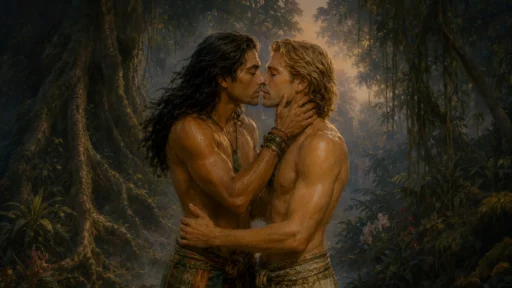
If you are looking for epic gay fantasy books for adult readers, you may want two things together: a world large enough to explore and queer men who matter within it. You may also want to know what “adult” means before committing to three books.
For The Aurelda Chronicles, the most useful starting point is its fantasy-first focus. I wrote a trilogy concerned with belonging, responsibility, memory, love, and the ways people respond when the structures around them strain. This article explains that invitation; it is not a heat rating or a promise of a particular romantic outcome.
Epic Gay Fantasy Books for Adult Readers: What to Ask

“Adult” does not, by itself, tell you whether a book contains explicit sex, how dark it becomes, or how much of its plot is romance. Those are separate questions. A reader looking for a high-heat romance and a reader looking for reflective epic fantasy may arrive through similar search language while wanting different experiences.
Aurelda has queer central characters and consequential relationships. That does not mean it should be described as interchangeable with every M/M romance, or that intimacy is its only source of interest. Its people inhabit a world with communities, competing responsibilities, and a living current called the Lumina.
If your first question is simply whether gay heroes belong at the center, where Aurelda fits among epic gay fantasy books addresses that broader doorway. This page stays with reader expectations: pace, emphasis, and how to make your own decision.
Tenderness Without a Promise of Invulnerability
Mo’an is important to the trilogy, but his story does not begin with an adult hero already explaining his purpose. It begins with Ah’Chaan and Ix’Quil, his parents, in Solara before he is born. The opening gives the world and those relationships time to become familiar.
I want that beginning to make room for a kind of attention that action alone cannot provide. A person can be gentle without being inconsequential. Listening can matter alongside courage. Love between men can belong within the larger story without turning every encounter into an argument for its legitimacy.
Those are the questions I bring to the work, not a guarantee that every reader will experience it in the same way. If you prefer an immediate battle, a fast romance, or a tightly explained system before you meet the people, the opening may ask for a different pace.
An Epic World With Time to Listen
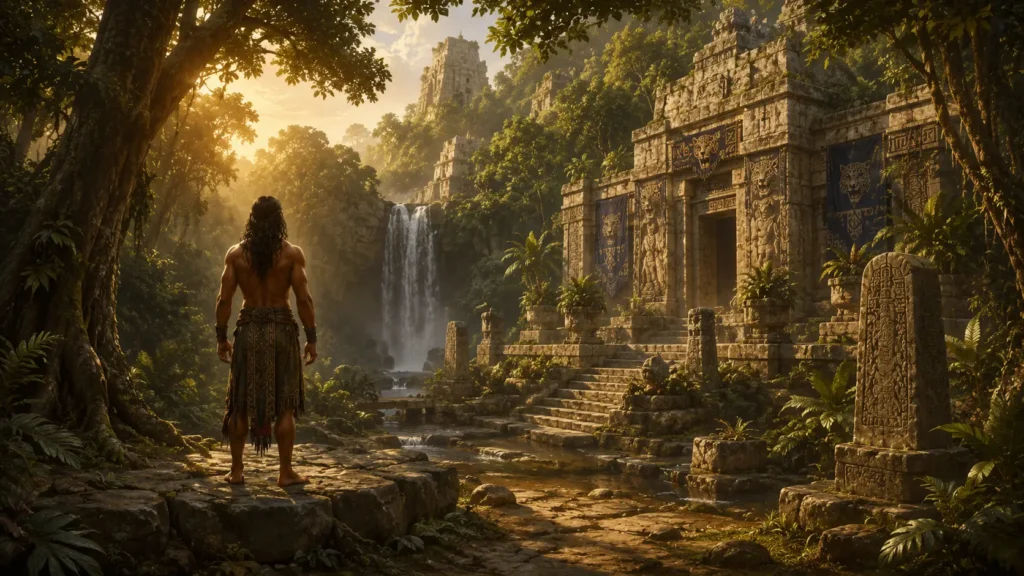
The first book, The Prophecy of Resonance, opens beneath the Great Ceiba. Ah’Chaan, a scholar newly arrived from Elaron, hears Ix’Quil sing during a gathering in Solara. The Lumina is not introduced as a glossary entry before anything happens; the scene lets its presence emerge through the people and their surroundings.
The trilogy’s world is fictional. Its landscapes and atmosphere draw on my life in the Riviera Maya, but Aurelda is not a reconstruction of Maya history or a claim about living Indigenous traditions. An imagined realm can be richly textured without becoming historical evidence.
Romance, Reflection, and Reader Expectations
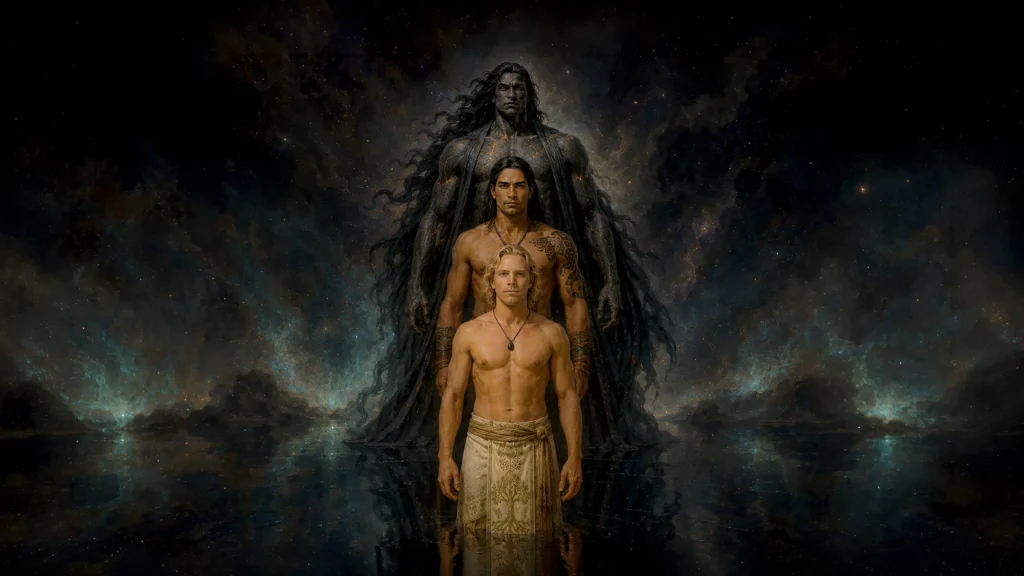
I want intimacy to matter without reducing the entire trilogy to a romance formula. Relationships can carry tenderness, uncertainty, responsibility, and desire while other concerns remain alive around them. I will leave the later pairings, outcomes, and revelations for the books.
The word “adult” should not be used as shorthand for a verified level of explicitness. A precise content guide would need to distinguish sexual content, violence, grief, coercion, and other potentially difficult material. This essay does not pretend that such a guide has already been established.
What you can assess now is the voice. Does the reflective pace interest you? Do you want time with a place before the larger conflict becomes clear? Does a story that makes room for tenderness alongside consequence sound inviting? Those answers are more useful than a claim that one book gives every adult fantasy reader exactly what they want.
Let the Opening Help You Decide

The public Reader begins with the actual first chapter, not a later romantic scene selected to imply a different kind of novel. That is important to me. I would rather let you encounter the story’s pace and decide whether you want to stay than make a promise the beginning does not keep.
There is room to arrive without sharing all of the spiritual language in these essays. You can read for people, atmosphere, relationships, and the questions that emerge between them. You do not have to accept a teaching before entering a fictional world.
The useful question is not whether Aurelda proves what adult gay fantasy ought to be. It is whether this particular story gives you a place you want to spend time.