


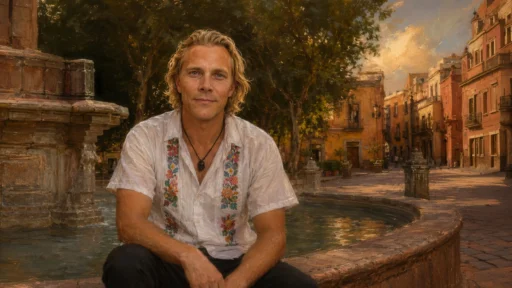
If you landed on Aurelda for the first time and saw the words “A Hero's Journey of Sacred Remembrance,” I would completely understand if your first reaction was: What the hell does that mean?
And perhaps the more important question: Why should I care?
Especially if you're a gay man, a queer person, or someone who has already spent years figuring out who you are. Maybe you came out. Maybe your family knows. Maybe you built the career, found friends, dated, had sex, fell in love, got your heart broken, went to Pride, deleted the apps and downloaded them again. And yet... something feels unfinished.
I keep seeing gay men describe this in remarkably ordinary language. They talk about wanting community and purpose. They talk about wanting connection with other men that isn't mediated by an app. Some are surrounded by accepting people and still describe a deep loneliness. Others are asking a question that goes even deeper: Can love and desire between men actually be sacred—not merely accepted?
I recognize that question. It is one of the reasons Aurelda exists.
What I Mean by Sacred Remembrance
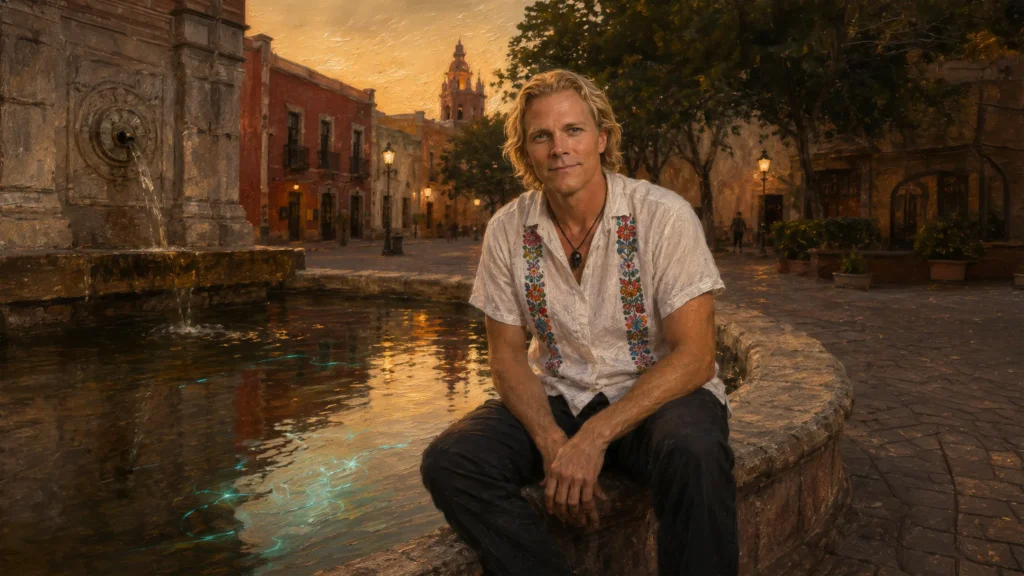
I want to be very clear about something. I am not asking you to believe in another religion. I am not asking you to memorize Aurelda's mythology, believe that the Lumina literally exists, or adopt my understanding of spirituality.
Sacred remembrance, in the simplest language I know, means: learning to stop leaving yourself behind.
Many of us learned very early how to divide ourselves. We learned which gestures were safe. Which desires should remain unspoken. How masculine we needed to appear. How sexual we were allowed to be. Whether tenderness made us weak. Whether spirituality belonged to people like us. Whether our bodies could be desired but never revered.
Coming out can change an enormous part of that story, and... coming out does not automatically put every divided piece of us back together.
Research on gay men's loneliness describes internalized stigma, concealment, fear of rejection, discrimination, and lack of meaningful support as recurring parts of that experience.¹ Research on sexual-orientation concealment has likewise found relationships among hiding, authenticity, loneliness, and well-being.²
That doesn't mean every queer person is wounded or secretly unhappy. It means survival can teach habits long after the original danger has passed. Sometimes we become visible to the world before we become fully visible to ourselves.
So Why Is Aurelda Fantasy?
Because sometimes another person's story lets us approach something we cannot yet approach directly. That is what Aurelda does... for me.
- When Mo'an struggles between responsibility and his own heart, I understand something about the roles we carry.
- When men in Aurelda love one another without their love being treated as spiritually inferior, I get to imagine a different relationship between queerness and the sacred.
- When the world fractures because what belongs together has been pulled apart, I recognize something deeply human beneath the mythology.
You don't need to see yourself wearing Mo'an's clothing. Rather, you might see yourself in his longing.
Fantasy, for me, is not an escape from being human. It is a mirror large enough to let us look again.
The Hero Isn't the Chosen One
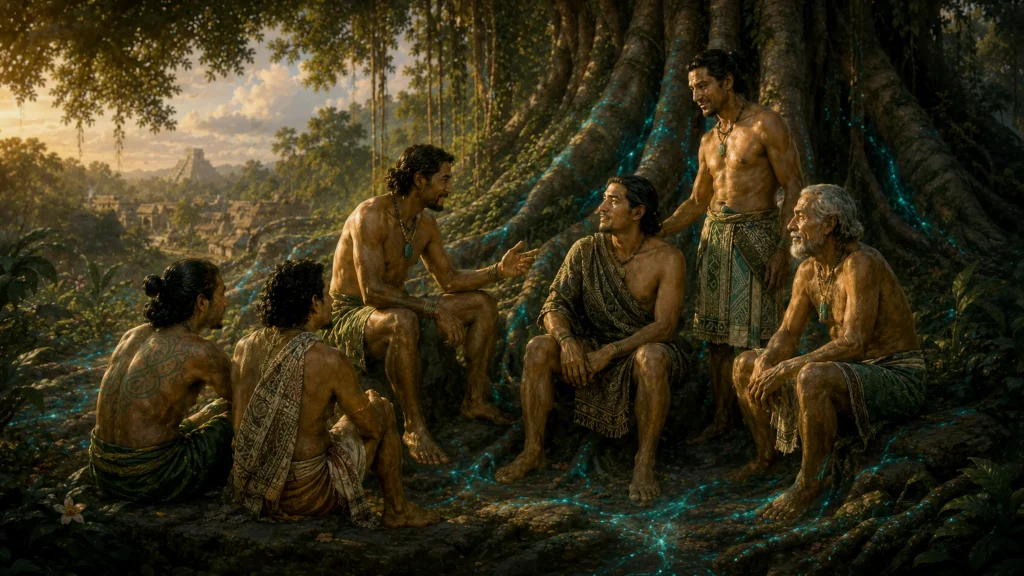
When I say “a hero’s journey,” I don’t mean becoming more important than everyone around you. I don’t mean spiritual superiority. And I certainly don’t mean becoming some perfected version of yourself.
The heroic moment might be telling the truth when your old instinct is to disappear. It might be letting another man love you without turning intimacy into a performance. It might be grieving something you have spent ten years pretending did not hurt. It might be setting a boundary. Calling a friend. Asking for help.
Because in Aurelda, the hero’s journey is not a solo endeavor.
It is having the courage to reach out. To create community. To find your tribe. To recognize that you do not have to walk through your life alone, and that sometimes becoming more fully yourself happens because someone else is willing to witness you while you do it.
It is about creating your own relationships, your own reality—not as an escape from the world, but as a conscious refusal to keep living according to rules that required you to abandon yourself.
One conscious breath. One conscious step. One honest choice at a time. Especially in the moments when the old instinct is to disappear again.
The point is not to become special. The point is to become less divided.
And perhaps, in doing so, to discover that becoming whole was never something you were meant to do alone.
How I Am Trying to Be of Service
This is the part I want to say more plainly. I do not believe the world needs me to become another guru. I don't have a perfected life to sell you, and Aurelda is not a doctrine with answers you are required to accept.
What I can do is create containers:
- I can write stories that help someone recognize a feeling he has never had language for.
- I can share breath practices that invite someone to come out of his head long enough to notice his body.
- I can write reflections that help turn a vague ache into a question.
- I can create spaces where queer people, sensitive people, creative people, and spiritually curious people do not have to perform enlightenment—or perform anything else—to belong.
- And I can help people take whatever they have remembered and give it form in their actual lives.
Story. Breath. Reflection. Belonging. Creation.
The companion essay on generational LGBTQ trauma considers inherited pressures without treating every queer life as the same story.
That's Aurelda—different doors into the same house.
You Don't Have to Believe in Aurelda
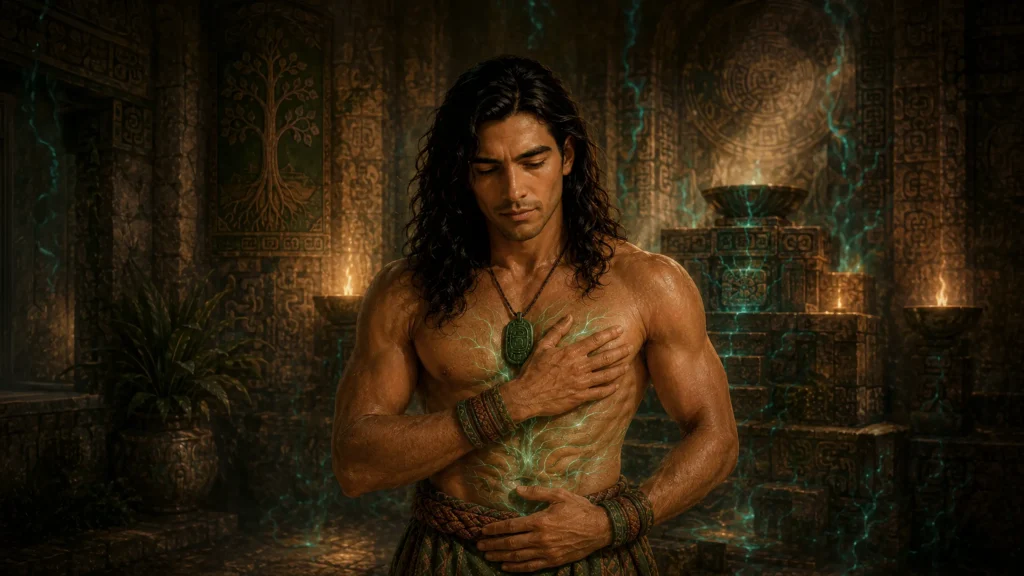
This may be the most important thing I can tell you:
- If you read one Aurelda story and recognize your own tenderness differently, it has served.
- If an image of two men loving each other without spiritual shame makes something inside you soften, it has served.
- If a reflection helps you recognize that you've spent years making yourself acceptable rather than making yourself known, it has served.
- If one breath reminds you that your body belongs to you, it has served.
You never have to believe that Aurelda is real. I only hope Aurelda helps you become more real to yourself. That is what A Hero's Journey of Sacred Remembrance means to me.
It is the journey back toward the parts of ourselves that fear, shame, survival, expectation, religion, culture, or ordinary life taught us to leave behind. And perhaps that is how I am trying to be in service through this work.
I am trying to create a world where a queer person does not have to become less tender, less embodied, less desirous, less spiritual, less creative, or less fully human in order to belong.
A place where the sacred does not require our disappearance. A place where story can whisper: You can come home with all of you.
And if even one person hears that, and decides not to leave himself behind this time, then Aurelda has done something worthwhile.