
Creative Direction for Mission-Driven Brands: Building a Coherent Digital Ecosystem
Learn how fractional creative direction for mission-driven brands helps align messaging, websites, content, WordPress, SEO, automation, and AI.
This post may contain affiliate links; your purchases help earn me a small commission at no extra cost, supporting the art and continued growth of Aurelda.
Your organization may have a meaningful mission, capable people, and plenty of activity, yet still feel increasingly difficult to explain:
- The website no longer reflects the work as it exists today.
- Programs, services, or offers have expanded without a clear hierarchy. Different pages use different language.
- Content is published, but no one is sure what should come next.
- Forms, email, CRM, booking, fundraising, or automation systems work individually without creating a clear audience journey.
A designer handles one piece. A developer handles another. Someone on staff manages email. An outside consultant recommends a new tool. Leadership keeps making reasonable decisions, but no one is holding the entire digital experience in view.
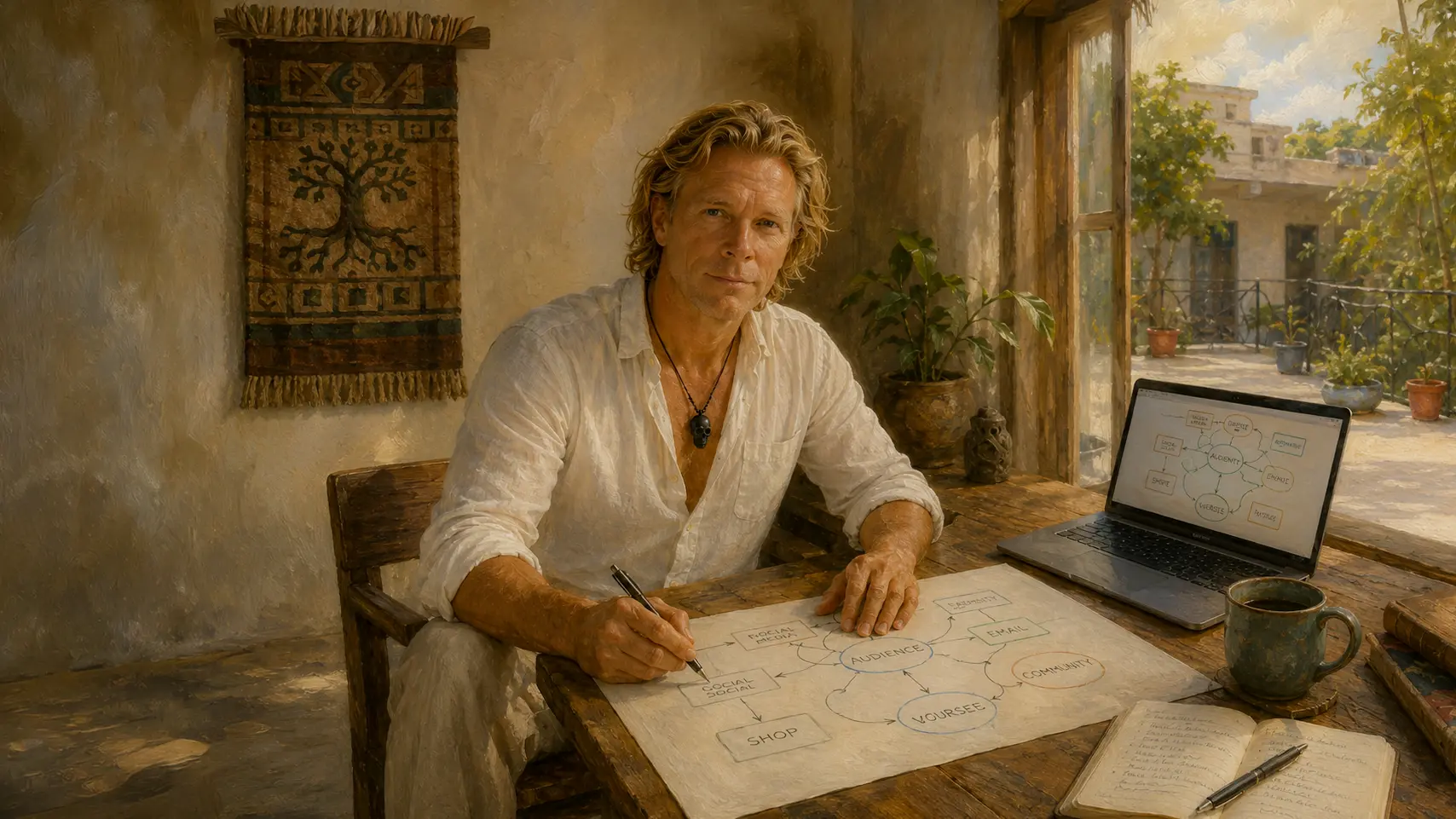
This is the kind of problem fractional creative direction is designed to solve. A fractional creative director provides senior, ongoing guidance across brand, website, content, technology, and execution without requiring the cost or internal structure of a full-time creative executive.
The goal is not more output for its own sake, the goal is a clearer strategic center from which better decisions can be made.
Growth Often Creates Digital Fragmentation
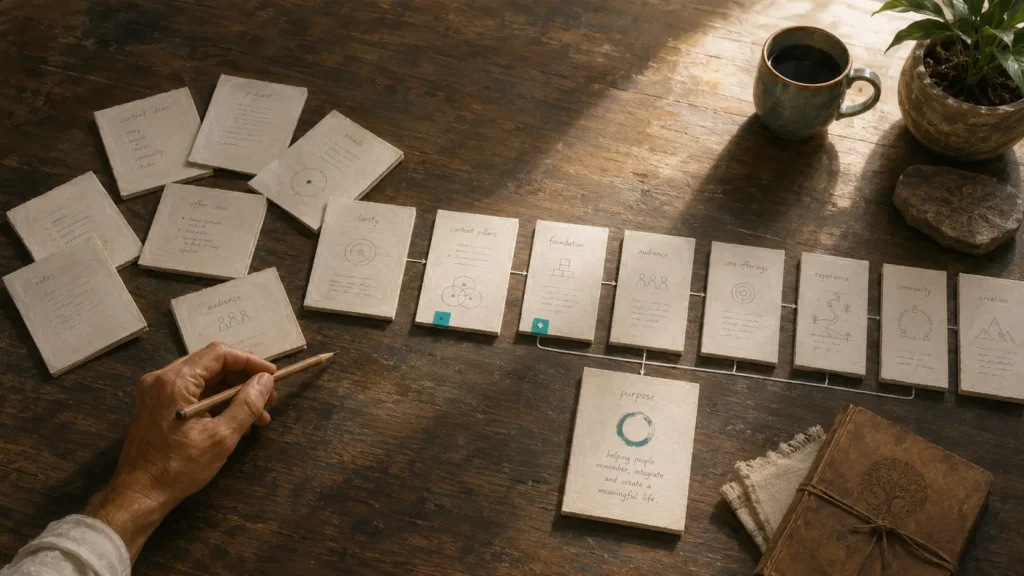
Mission-driven organizations rarely become fragmented because their teams stop caring. More often, fragmentation is the side effect of growth.
A nonprofit launches a new program. A foundation begins serving a different audience. A creator develops several offers. A founder-led business adds a course, membership, newsletter, podcast, booking system, or online shop.
Each addition makes sense when it is created. Over time, however, the organization may accumulate:
- Multiple audiences with no clear priority
- Website sections built during different phases
- Competing calls to action
- Inconsistent brand language
- Content without an editorial structure
- Forms that do not connect to meaningful follow-up
- Separate email lists or CRM workflows
- Vendors working from different assumptions
- AI-generated content without clear governance
- Technology the internal team does not fully understand or maintain
The resulting digital ecosystem may still function technically. But it becomes harder for visitors to understand, harder for teams to manage, and harder for leadership to direct.
The organization does not necessarily need another platform or redesign. It needs to understand how the existing parts relate.
What Is Fractional Creative Direction?
A fractional creative director is a senior creative leader who works with an organization on a part-time, retained, or ongoing basis:
- Unlike a full-time creative director, the fractional partner supports the organization for a defined portion of each month or during a specific period of growth, transition, or change.
- Unlike a project-based designer, the role is not limited to producing a logo, website page, campaign, or presentation.
- Unlike a conventional consultant, the relationship may extend beyond recommendations into creative oversight, implementation guidance, vendor coordination, reviews, and selective hands-on work.
The fractional creative director helps answer questions such as:
- What are we actually trying to communicate?
- Which audience matters most at this stage?
- What must be clarified before we redesign the website?
- Which content supports our goals?
- Where are people becoming confused or dropping away?
- Which systems should connect?
- What should the internal team own?
- Which work belongs now, later, or not at all
- How do we keep different vendors moving in the same direction?
- How can we use AI without weakening accuracy, voice, or trust?
The value is not that one person performs every task, the value is that someone senior understands how the tasks influence one another.
What Does a Fractional Creative Director Actually Do?

The exact work depends on the organization, but it usually begins by connecting leadership vision with the digital systems, creative decisions, and practical execution required to move it forward.
Clarifies Positioning and Priorities
Before refining pages or producing content, the organization needs a clear answer to several basic questions:
- Who are we here to serve?
- What do we want those people to understand?
- What makes our approach distinct?
- What action should they take?
- What deserves the greatest visibility?
A fractional creative director helps turn a large collection of ideas, programs, and internal language into a clearer public structure.
Aligns the Brand and Website
Brand strategy should not end with a logo or a messaging document. It should influence:
- Website architecture
- Navigation
- Page hierarchy
- User experience
- Calls to action
- Content priorities
- Visual direction
- Email communication
- Forms and follow-up
- Campaigns and launches
When brand and website decisions are made separately, the organization may look polished while remaining difficult to understand. Fractional creative direction keeps the message, experience, and visual system connected.
Creates Stronger Audience Pathways
A visitor rarely arrives already understanding the organization. They may come through a search result, referral, campaign, social post, video, article, grant announcement, event, or recommendation. Their path might need to lead toward:
- A donation
- A program application
- A discovery call
- A membership
- A resource
- An email subscription
- A course or product
- A volunteer opportunity
- A partnership inquiry
A coherent digital ecosystem makes that journey easier to recognize. The objective is not to push every visitor toward the same conversion. It is to help the right person understand what matters and find an appropriate next step.
Connects Content and SEO to the Organization’s Goals
Publishing more content does not automatically create visibility. A useful SEO content strategy begins with audience questions, search intent, organizational priorities, and the role each page plays within the wider site.
Fractional creative direction can help determine:
- Which service or program pages need improvement
- Which searches indicate meaningful audience need
- Which articles strengthen authority
- Where several pages are competing for the same topic
- How articles should link to services and resources
- What can be repurposed across email, video, or social channels
- Which content is unlikely to support the mission or business
This moves content from reactive publishing toward an intentional system.
Guides WordPress and Digital Platform Decisions
For many smaller organizations, WordPress is not simply the website. It may also connect:
- Forms
- CRM
- Email marketing
- Donations
- Booking
- Events
- Courses
- Membership
- Ecommerce
- Analytics
- Search optimization
- Automation
A platform can become difficult to manage when plugins, vendors, and workflows are added without clear governance.
Senior direction helps the team distinguish between a design problem, a technical problem, a content problem, and a process problem before paying to solve the wrong one.
Coordinates Specialists and Vendors
A developer may build exactly what was requested. A designer may produce a strong visual system. A writer may deliver polished content. An automation specialist may connect the tools correctly. The work can still feel disjointed when each specialist is operating from a different understanding of the strategy.
A fractional creative director provides continuity across those relationships. They can:
- Clarify the brief
- Set priorities
- Review work against the strategy
- Identify gaps between disciplines
- Translate between leadership and technical teams
- Prevent isolated decisions from creating future problems
- Keep the audience experience visible throughout execution
This reduces the burden on leaders who have become the default coordinator for every digital decision.
Establishes Responsible AI Workflows
AI can accelerate research, content development, visual exploration, documentation, and internal workflows. It can also create inconsistency, factual errors, generic language, brand drift, and an enormous volume of material that no one has time to review.
Responsible AI strategy requires more than choosing tools. It requires human decisions about:
- What AI should and should not do
- Who reviews the work
- Which sources are trusted
- How brand voice is maintained
- How personal or organizational data is handled
- What requires subject-matter expertise
- How visual and editorial consistency are protected
- Who remains accountable for the final result
At Aurelda Studio, AI is treated as a human-led production and reflective tool, not a substitute for authorship, judgment, strategy, or responsibility. That approach is reflected in the Studio’s current services and Jason Samadhi’s wider digital practice.
Why a Website Redesign Is Often Not Enough
A redesigned website can be valuable, but a visual redesign cannot resolve questions the organization has not answered.
The site may look outdated because its visual system genuinely needs refinement. It may also look outdated because the organization has changed while its positioning, structure, content, and audience strategy have not.
Consider a nonprofit with five programs displayed at the same level. The apparent problem may be navigation.
The deeper issue may be that the organization has never decided which audience each program serves, how the programs relate, or what a first-time visitor needs to understand before choosing one.
A designer can make the navigation cleaner. They may not responsibly establish the hierarchy without strategic direction. The same principle applies when:
- A donation page receives traffic but few completed gifts
- A founder offers several services with no clear entry point
- A course exists but the surrounding content does not prepare people for it
- A CRM contains contacts but no meaningful segmentation
- An organization publishes frequently without building search authority
- A booking form works but the preceding page does not create enough clarity or trust
Treating every symptom as an isolated production task can create a more attractive version of the same confusion. Fractional creative direction looks for the shared cause.
What a Coherent Digital Ecosystem Looks Like

Coherence does not mean every page looks identical or every audience receives the same message. It means the parts support a shared direction.
In a coherent digital ecosystem:
- The positioning is clear enough to guide decisions
- The website reflects the current mission and offers
- Audiences can recognize where they belong
- Navigation supports real user journeys
- Content has priorities and purpose
- Search strategy supports meaningful discovery
- Forms connect to relevant follow-up
- CRM and email structures reflect actual audience relationships
- Automation reduces friction rather than creating distance
- AI operates within human-led standards
- Vendors understand the larger objective
- Internal teams can maintain what has been built
- Leadership knows what should happen next
The result is not perfection, it is greater continuity. As an organization, you spend less time reconciling disconnected decisions and more time strengthening the work it exists to do.
The Business Value of Better Coherence
Digital fragmentation carries costs that may not appear neatly within one budget line:
- Leadership time is consumed by small decisions.
- Staff members duplicate work because systems do not connect.
- Content is rewritten repeatedly because positioning is unclear.
- Visitors leave because they cannot determine what the organization offers.
- Vendors are paid to solve symptoms that return six months later.
- Useful tools are underused because no one owns the workflow.
- Opportunities are lost because the audience path is too complicated.
Fractional creative direction can create value by improving the sequence and quality of decisions. The practical benefits may include:
- Clearer positioning
- More consistent messaging
- Stronger website architecture
- Better audience pathways
- More focused content
- More useful SEO priorities
- Reduced vendor drift
- Better internal documentation
- More maintainable digital systems
- Responsible AI governance
- Greater continuity across campaigns and platforms
- More confidence about what to do next
The objective is not simply to make the organization appear more professional. It is to make meaningful work easier to understand, trust, manage, and act upon.
Who Benefits Most from Fractional Creative Direction?
Fractional creative direction is often a strong fit for organizations whose work has become more complex than their current leadership structure can comfortably support. That may include:
- Nonprofits and foundations with lean teams. The organization may have communications, fundraising, program, and leadership staff, but no senior creative or digital leader connecting their priorities.
- Purpose-driven founders. The founder may carry the vision while also becoming the bottleneck for messaging, website, content, technology, and vendor decisions.
- Independent creators, authors, coaches, and educators. Their expertise may have expanded into several offers, platforms, audiences, or content channels without a clear ecosystem around them.
- Founder-led businesses entering a new phase. The company may be repositioning, launching a new offer, redesigning its site, building a content strategy, or preparing to scale.
- Teams with strong execution but weak alignment. The team can produce the work but needs senior guidance about what should be produced, why, in what order, and how it all connects.
- Organizations managing too many specialists. Leadership may be tired of serving as the translator among designers, developers, writers, marketers, platform vendors, and automation specialists.
The model is less useful when the need is truly one isolated production task and the underlying direction is already clear. In that case, a specialist or defined project engagement may be the better choice.
Fractional Creative Director, Agency, Consultant, or Freelancer?
These roles can overlap, but they solve different kinds of problems:
- A freelancer. A freelancer is often hired to produce a particular deliverable or provide a specific skill. The direction usually comes from the client.
- A consultant. A consultant studies a problem and recommends a path. Some consultants also support implementation, while others end with the strategy.
- An agency. An agency provides a team and may offer strategy, design, development, content, media, or marketing execution. Agencies are often appropriate when the organization needs a larger delivery capacity.
A Fractional Creative Director
A fractional creative director becomes an ongoing senior partner inside the decision-making process. They may work with internal teams, freelancers, agencies, or existing vendors. Their central responsibility is continuity across priorities, audience experience, creative direction, and execution.
The question is not which model is universally best. It is which kind of support matches the real constraint.
What Working with Aurelda Studio Can Include

Aurelda Studio works between leadership vision and day-to-day digital execution. Depending on the engagement, fractional creative direction may include:
- Brand positioning and messaging
- Website and information architecture
- User journeys and calls to action
- WordPress strategy and governance
- SEO content strategy
- Digital platform planning
- CRM and email architecture
- Forms, booking, fundraising, and automation
- Human-led AI workflows
- Creative review and quality control
- Vendor and collaborator coordination
- Priority-setting and roadmaps
- Selective hands-on implementation
Partnerships may be designed as a focused strategic engagement or an ongoing relationship.
Note: Aurelda Studio’s current fractional partnerships typically involve approximately 10 to 20 hours per month, depending on the organization’s needs and the phase of work.
How the Work Begins (5-Step Process)
A strong engagement should not begin by assuming the solution. It begins by understanding the current reality.
- Discovery and diagnosis. The work, audience, website, message, content, systems, internal capacity, and points of friction are reviewed together. The aim is to distinguish symptoms from causes.
- Strategy and priority-setting. The highest-value opportunities are identified. The work is sequenced so the organization knows what belongs now, what can wait, and what may not be necessary.
- Structure and implementation. The strategy becomes tangible through messaging, page architecture, content systems, WordPress improvements, automation, platform planning, or coordinated execution.
- Review and refinement. Work is evaluated against the strategic center so it does not drift as new information or needs arise.
- Launch support and next steps. The organization receives a clearer foundation, a practical roadmap, or ongoing fractional guidance for the next phase.
This reflects Aurelda Studio’s 5-step process of discovery, diagnosis, priority-setting, implementation, refinement, and continued support.
Aurelda as a Living Case Study in Digital Ecosystem Design
Aurelda itself is an example of the kind of complexity this approach is designed to hold. It includes publishing, books, editorial content, video, podcasting, email, ecommerce, membership, community, breathwork services, courses, a detailed Codex, SEO, CRM, automation, AI-supported production, and multiple audience pathways.
Those elements could easily become unrelated projects competing beneath one name. Instead, each pathway is designed to serve a distinct audience while remaining connected to a larger brand architecture. Building Aurelda has required the same disciplines offered through the Studio:
- Positioning
- Audience segmentation
- Website architecture
- WordPress systems
- Content strategy
- Visual direction
- Search optimization
- Email and CRM
- Ecommerce
- Automation
- Creative governance
- Responsible AI use
- Long-term platform thinking
A prospective Studio client does not need to be interested in Aurelda’s books, breathwork, or spiritual language.
I provide fractional creative direction and digital brand strategy for mission-driven brands, helping nonprofits, foundations, creators, and founder-led teams connect their messaging, platforms, content, and technology into one coherent digital ecosystem. Learn more in Aurelda Studio »
Aurelda demonstrates Jason’s ability to hold a complex creative and digital ecosystem in view, determine how its parts relate, and translate a large vision into practical audience pathways and maintainable systems.
Where Will You Go From Here?
Comment Below
Share the Love
Share this article with kindred spirits.
Jason Samadhi

Begin the Hero’s Journey
Enter the world of Aurelda through The Prophecy of Resonance, Book One of The Aurelda Chronicles. Begin the journey with free sample chapters of Book 1.
Listen & Re-member
Aurelda Soul blends mythic storytelling, sacred wisdom, and grounded reflection for modern seekers finding their way home.

Find Your Thread
The Seven Threads Protocol helps you name your pattern, reconnect breath, body, and story, and begin a grounded path back to your own remembering with clarity. Download the free Seven Threads of Light Protocol guide now.
