Ancient Maya Same-Sex Relationships: Careful Reflection in Aurelda
Explore how same-sex relationships of the ancient Maya society balanced intimacy, public roles, and spiritual connections, as reflected in Aurelda.
This post may contain affiliate links; your purchases help earn me a small commission at no extra cost, supporting the art and continued growth of Aurelda.
Some histories must be approached like sacred ground: slowly, humbly, and without taking more than the evidence can hold.
That is especially true when speaking about ancient Maya same-sex relationships. The desire to find ancestral affirmation is real. Many queer readers long to know that love like theirs existed before modern shame gave it other names. That longing deserves tenderness. It also deserves accuracy.
Aurelda is not ancient Maya society. It is an original mythic world inspired by Mesoamerican beauty, spiritual ecology, sacred time, and reverence for balance. Its queer love stories are not presented as historical reconstruction. They are visionary echoes, shaped with care, meant to honor rather than claim.
Within that distinction, the bond between Mo’an and Itzam’Yeh can become a living doorway. Their love is same-sex, sacred, embodied, and central to Aurelda’s mythic architecture. It speaks to readers who have been told that queer tenderness is peripheral, when their own hearts know it can be holy.
What the Evidence Can and Cannot Say
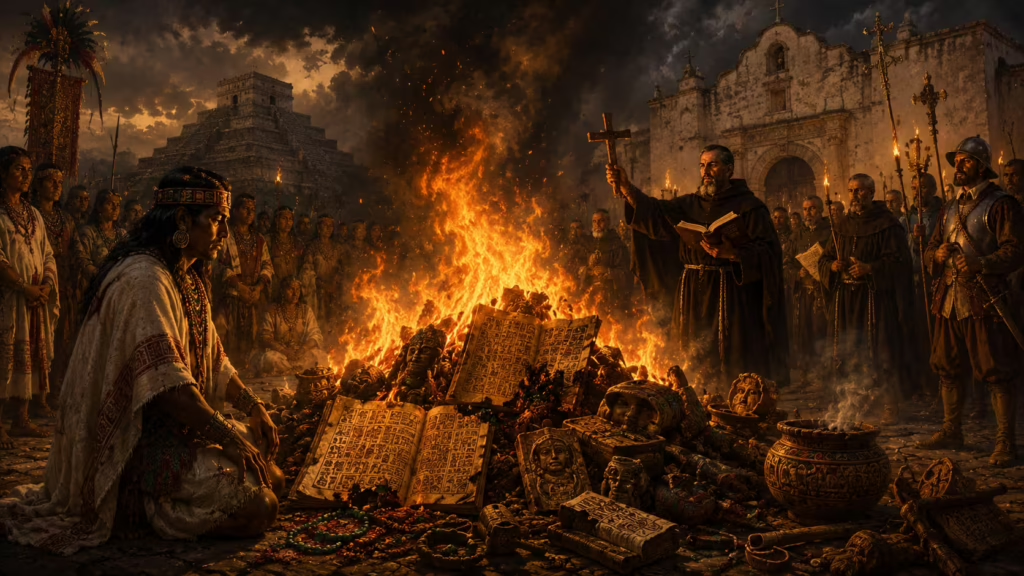
Modern scholarship does not give us a simple, universal statement about how all ancient Maya communities understood same-sex intimacy. There was no single Maya state, no single uniform culture, and no timeless rule that applied across every city, class, century, and region. Gender and sexuality varied by place, era, social role, ritual context, and the sources available to interpret them.
That means the most honest approach is not to say, “the ancient Maya accepted same-sex relationships,” as if the matter were settled and uniform. It is also not accurate to erase queer possibility from the past because colonial language made it difficult to see.
What can be said with care is this: Maya gender systems were complex, and scholars have studied how gender shaped art, politics, household life, ritual, and cosmology. Some evidence and interpretations suggest that sexuality in the ancient Americas could be understood through frameworks more fluid than modern Western binaries. At the same time, many surviving written accounts come through colonial eyes, often filtered by Spanish Christian condemnation, legal anxieties, and political agendas.
That is why this post needs a careful bridge. Aurelda may draw inspiration from the possibility of sacred fluidity, but it should not present every Aureldian practice as something directly proven about ancient Maya life.
Why Colonial Sources Must be Read Carefully
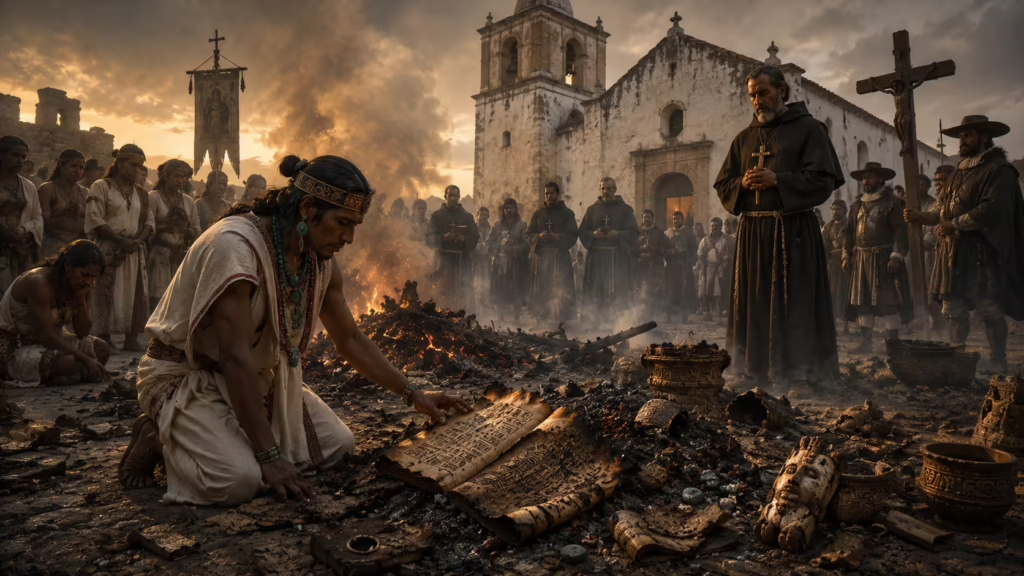
Much of what later readers encounter about same-sex behavior in colonial Yucatán comes from sources shaped by conquest, religious judgment, and struggles over power. Words like “sodomy” were not neutral descriptions. They carried legal, theological, and political force.
Scholars such as Pete Sigal have shown that colonial discussions of male same-sex acts in Yucatán were deeply entangled with power, elite rivalry, conquest, and competing moral systems. These records can reveal that same-sex desire and behavior were discussed, feared, punished, politicized, or ritualized in certain contexts. They do not automatically reveal how every Maya person understood love, intimacy, identity, or sacred union in daily life.
This matters for Aurelda because reverence does not require exaggeration. A story can be queer-affirming without pretending the historical record is clearer than it is. In fact, honesty makes the sacred stronger. It allows the reader to feel the difference between history, interpretation, and mythic remembrance.
Sacred Sexuality in Aurelda
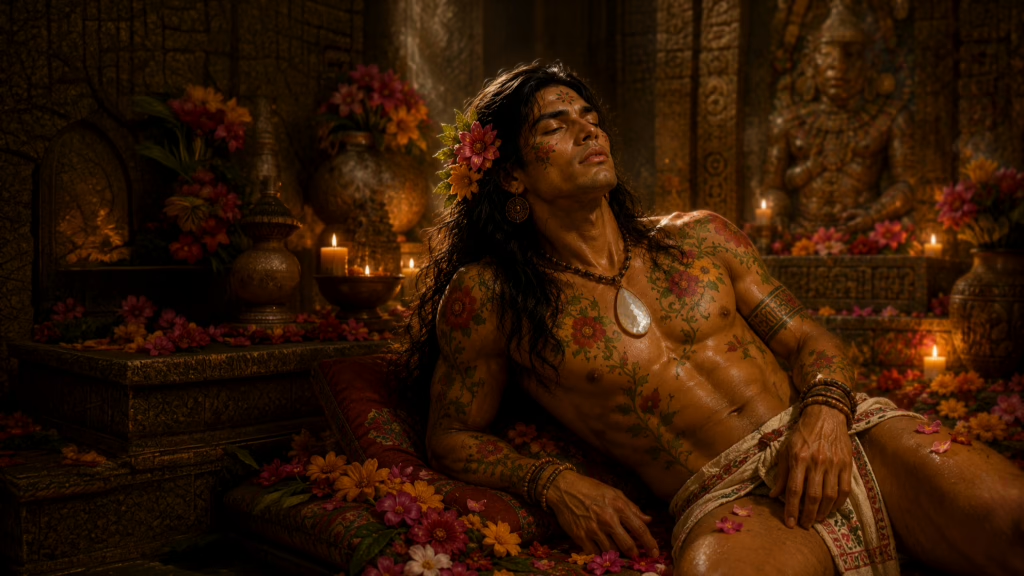
In Aurelda, same-sex love is not treated as a side path. It is woven into the realm’s deepest healing. Mo’an and Itzam’Yeh are not included to decorate the story with representation. Their bond carries spiritual consequence. It is tender, erotic, disciplined, and devotional, held within a world where the body can become a bridge to memory.
This is where Aurelda speaks in its own voice. Mo’an’s fluid nature is not merely a modern identity translated into ancient clothing. It is a resonance, an embodied sensitivity to the Lumina. It allows him to hold stillness and movement, receptivity and radiance, longing and service without contradiction.
Itzam’Yeh meets him not as a symbol, but as a beloved with his own strength, discipline, and spiritual depth. Their bond is same-sex love, but it is also sacred recognition. It asks the reader to imagine a world where queer intimacy is not treated as a problem to solve, but as a current capable of restoring what shame has fractured.
That does not mean every private act should be explained as ritual, or that every gesture should be treated as historically Maya. In the revised frame, Mo’an and Itzam’Yeh’s intimacy belongs first to Aurelda’s canon. It may echo Mesoamerican questions of balance, duality, embodiment, and sacred relation, but it remains original mythic fiction.
Story as Medicine: Love Without Erasure
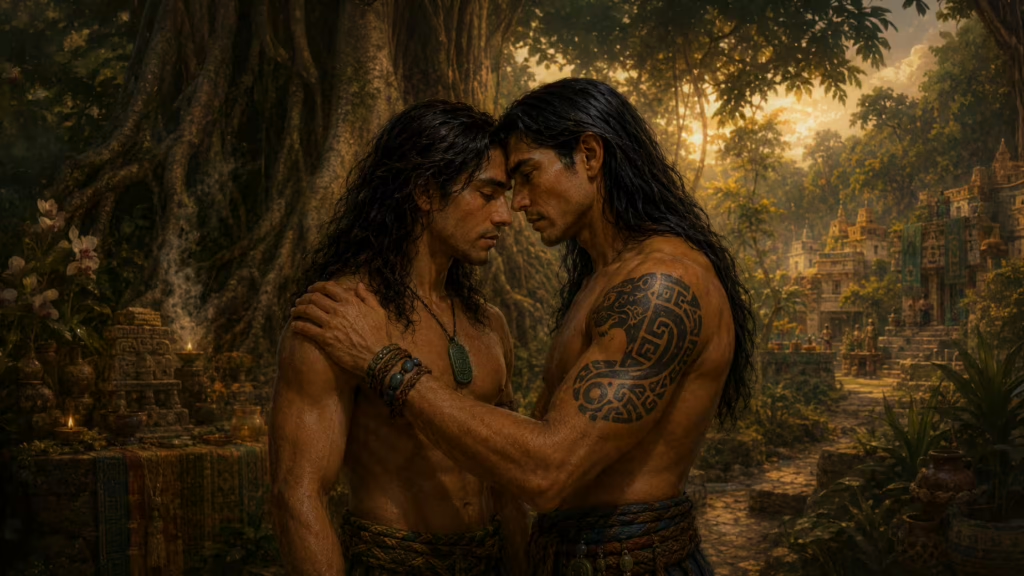
A spoiler-safe story medicine example lives at the center of Mo’an’s path.
Mo’an carries a fluid nature that others do not always understand at first. Rather than treating that difference as weakness, the story gradually reveals it as sacred capacity. His sensitivity, tenderness, and devotion to Itzam’Yeh are not obstacles to his purpose. They are part of how he listens to the Lumina.
For a reader who has learned to divide body from spirit, desire from devotion, or queerness from holiness, this is medicine. Mo’an does not heal by becoming less himself. He heals by allowing the parts of himself that were easiest to shame to become part of his service.
Itzam’Yeh’s presence deepens that medicine. He offers a form of masculine love that is strong without domination and tender without apology. Together, they create a mirror for queer readers and allies alike: sacred intimacy does not require erasure. Love can be disciplined, embodied, reverent, and still unmistakably alive.
This is not a plot summary. It is the healing pattern beneath the story. The reader is invited to feel how myth can repair what argument alone cannot reach.
Why the Distinction Matters
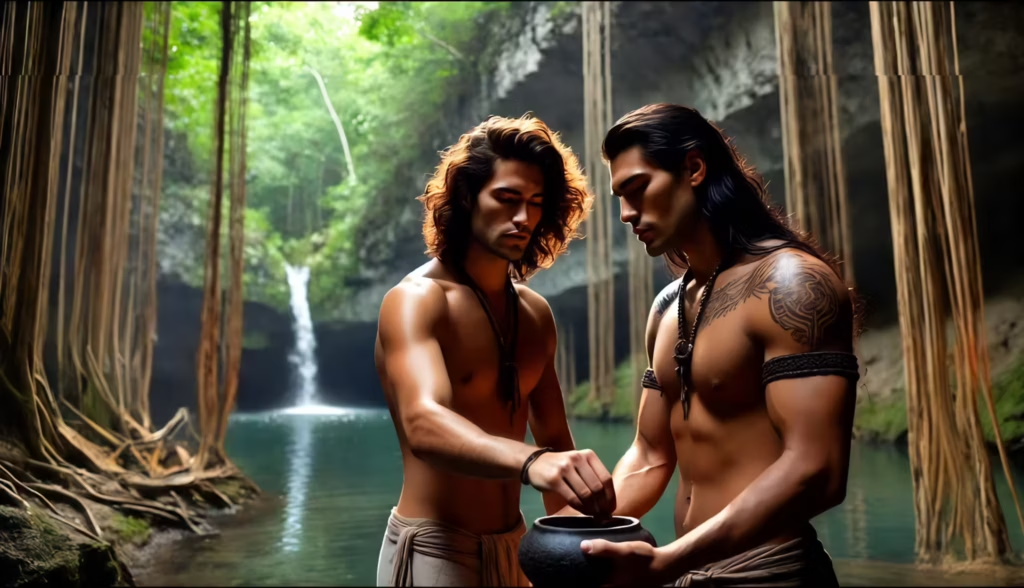
There is a difference between claiming the ancient Maya “had the same categories we do now” and saying that ancient Mesoamerican worlds invite us to question modern assumptions about gender, sexuality, embodiment, and sacred relation.
The first risks projection. The second opens a more honest doorway.
Aurelda belongs in that doorway. It does not need to prove that Mo’an and Itzam’Yeh are direct historical copies of ancient Maya couples. Their power comes from being original mythic figures who carry a reverent echo of pre-colonial complexity, colonial rupture, and queer sacred remembering.
When the post is framed this way, it becomes more accurate, more respectful, and more useful for readers. It gives them history with humility, myth with integrity, and story as medicine without pretending the archive says more than it does.
Ancient Maya same-sex relationships remain a subject of careful interpretation, not easy certainty. But Aurelda can still offer a sacred imaginative response: a world where queer love is not exile, not spectacle, and not an exception to holiness.
What might your own soul remember if you entered Aurelda’s queer sacred wisdom through the Codex?
Outside Aurelda
- Queer Magic: LGBT+ Spirituality and Culture from Around the World — Tomás Prower (2018). Global survey of queer spiritual lineages, ritual practices, and mythic figures; accessible and well-cited.
- Queer Spirits: A Gay Men’s Myth Book — Will Roscoe (1995). Mythic/archetypal stories for gay men, rooted in cross-cultural traditions (incl. Two-Spirit research).
- Two Flutes Playing: A Spiritual Journeybook for Gay Men — Andrew Ramer (rev. eds. 2005/2020). Myth-infused teachings and practices exploring sacred eros and identity.
- For more on Maya gender roles and societal structures, you can explore resources like Ancient Maya gender identity and relations.
- Additionally, you may find valuable perspectives on ancient sexuality and ritual in Sexuality among the ancient Mayas.
Where Will You Go From Here?
Comment Below
Share the Love
Share this article with kindred spirits.
What If the Story Remembered You?
Download free sample chapters from the upcoming Third Edition of The Aurelda Chronicles, a Maya-inspired visionary fantasy trilogy where sacred light fractures, ancient memory awakens, and love becomes the bridge between worlds. Queer-affirming, all are welcome.
Jason Samadhi
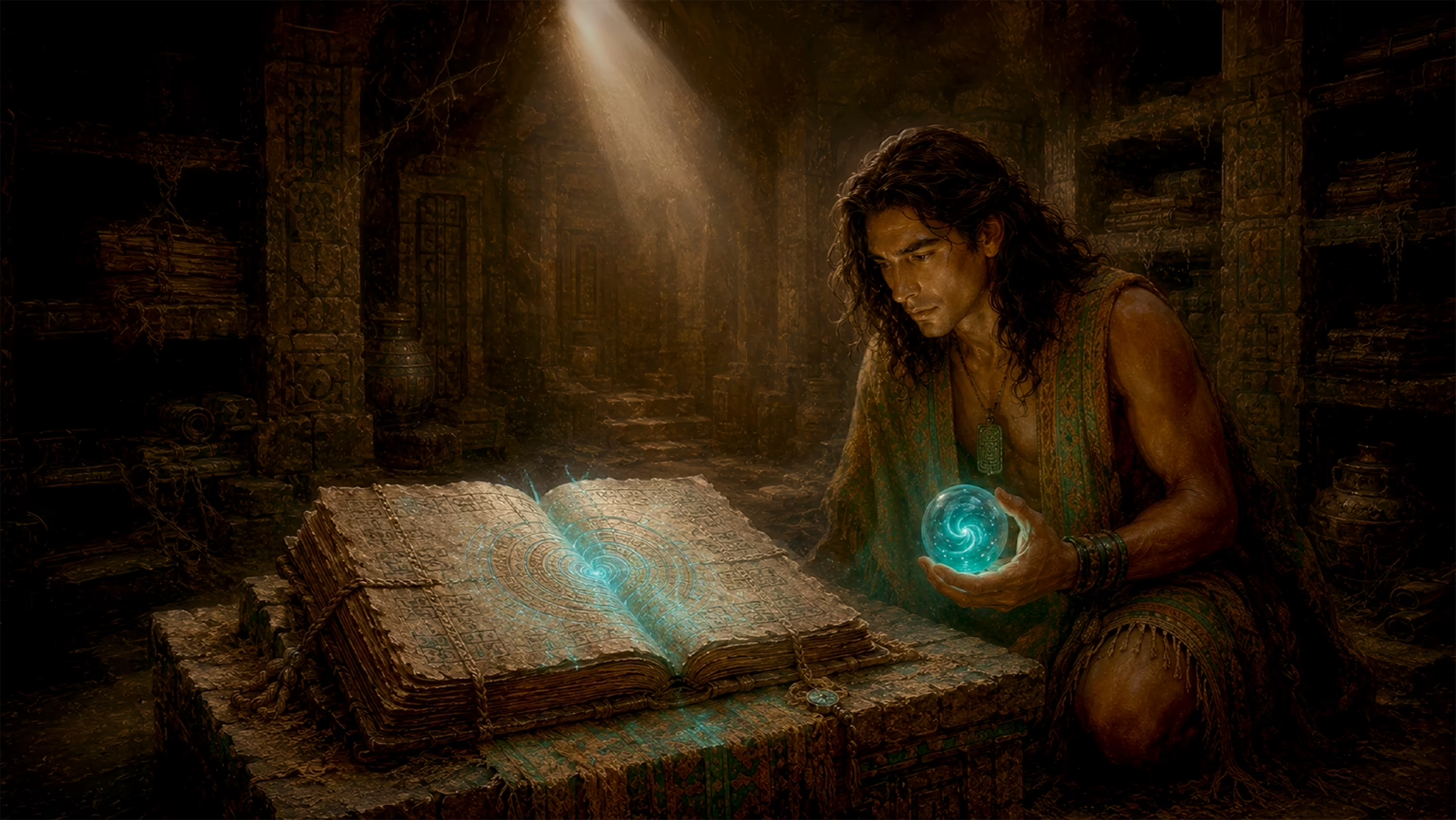
What if the Story Remembered You?
Download free sample chapters from the The Aurelda Chronicles, a Maya-inspired visionary fantasy trilogy of sacred remembrance.
Listen & Re-member
Aurelda Soul blends mythic storytelling, sacred wisdom, and grounded reflection for modern seekers finding their way home.
Find Your Thread
Download the free Seven Threads of Light Protocol, a primer for the upcoming The Book of Remembering by Jason Samadhi. Coming Soon.