



A persistent hum beneath the skin can make ordinary life feel difficult. It does not tell you, by itself, why it is happening. Calling the sensation a spiritual fracture may supply an image, but an image cannot establish a cause.
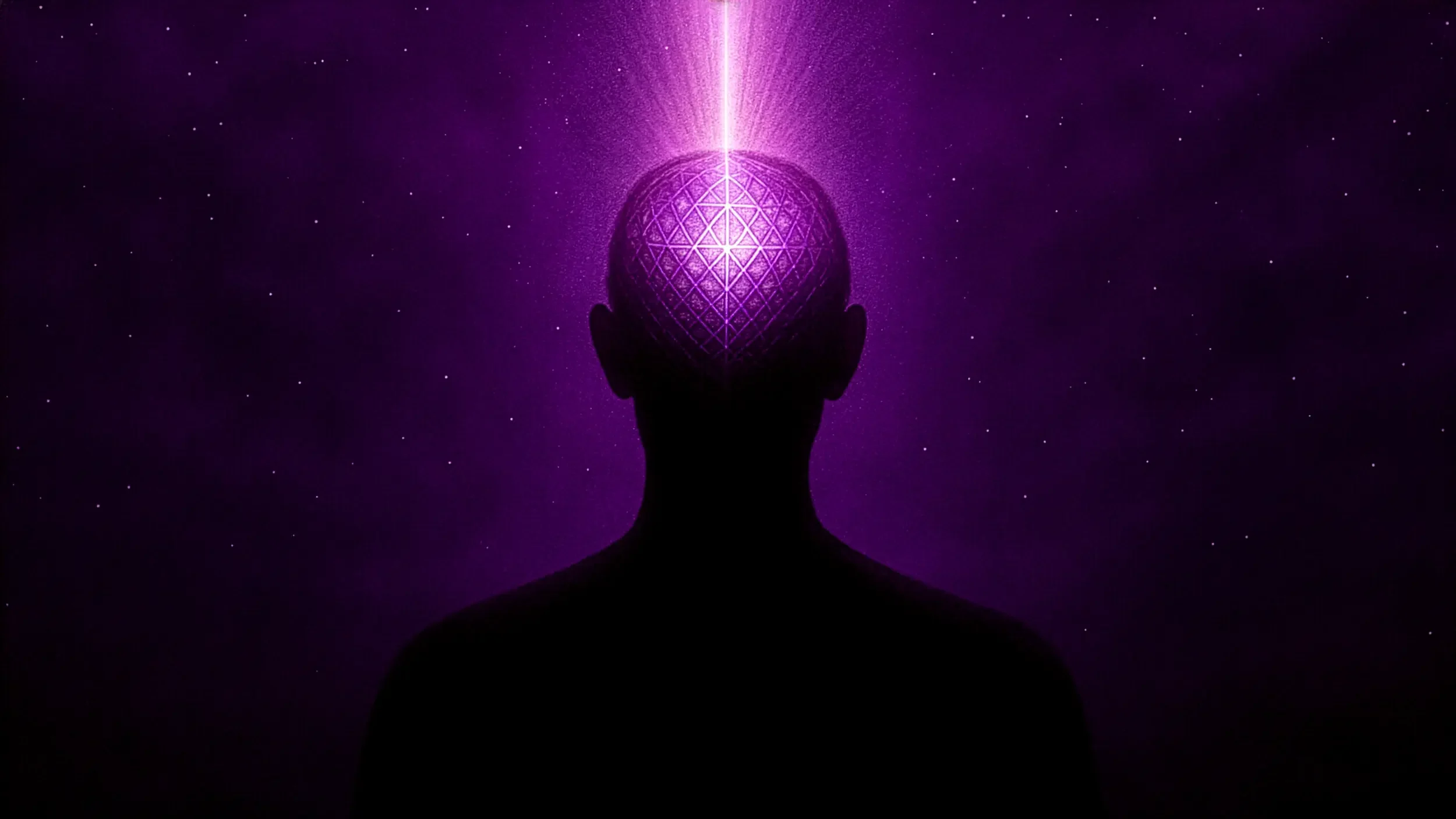
Nervous system regulation and spiritual coherence are different kinds of language. The first concerns physiology. The second, in this essay, names a desire to bring attention, values and conduct into a more honest relationship.

A Teaching Map, Not an Anatomical Model

Aurelda’s site teaching order connects seven principles with characters and chakra symbolism. It can organize questions without claiming that a gland receives cosmic information or a heart field attracts events.
- Mentalism: what thought am I treating as a fact?
- Correspondence: what is happening outside, and what am I adding?
- Vibration: what do I want to say, and where can I say it?
- Cause and Effect: which action is actually mine to choose?
- Polarity: can more than one feeling be true?
- Rhythm: what pace is workable today?
- Gender: what allows structure, care and belonging without an imposed identity?
One Question Is Enough

You do not need to work through a seven-step activation sequence. A question may help you name a boundary or a need. It may not. No particular feeling proves spiritual progress.
The Seven Threads Guide has a separate informational page. Its relationship to the developing Book of Remembering does not make it a clinical protocol.
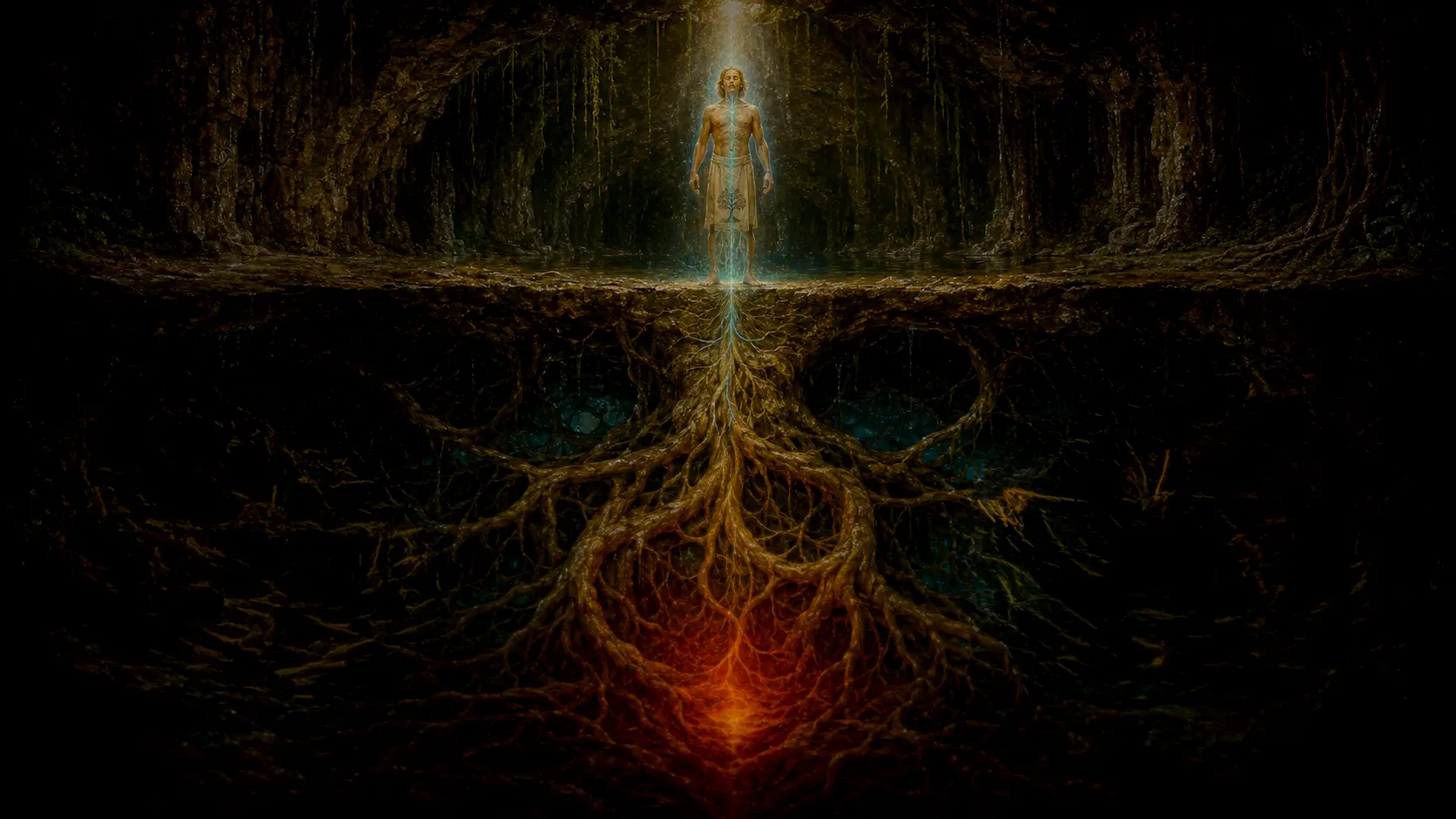
Symptoms Deserve Their Own Attention

Persistent shaking, anxiety, exhaustion or pain should not be explained away as sensitivity to the Lumina. The Lumina belongs to Aurelda’s fiction; it is not a medical diagnosis. A spiritual interpretation can coexist with care, but should not substitute for it.
If an ordinary attention exercise feels useful, the sensory grounding article describes one. You are free to skip it. The task is not to become a perfected person before your needs can be taken seriously.