


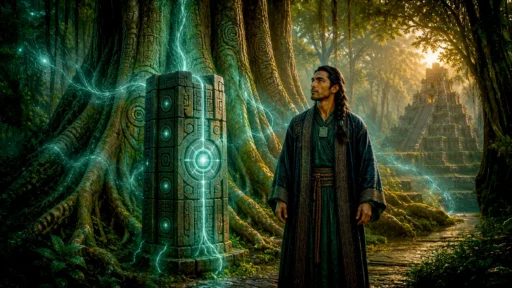
Prophecy and technology are often treated as opposites. One belongs to the temple. The other belongs to the machine. Aurelda asks a different question. What if the danger is not technology itself, but forgetting what kind of consciousness is holding it?
In Aurelda, prophecy does not arrive to reject invention. It arrives to guide relationship. It reminds leaders, healers, scholars, and seekers that sacred power must never be separated from reverence. A tool can illuminate a city. A tool can also deepen a wound. The difference begins with intention, consent, pacing, and the humility to listen before reaching for control.
Aurelda is a fictional, Mesoamerican-inspired resonance realm. It is not a reconstruction of Maya history and does not claim authority over living Indigenous traditions. It is an original mythic world where story, land, memory, breath, queer embodiment, and sacred technology meet as mirrors for the reader’s own life.
Why Fantasy Prophecy and Technology Belong Together
Fantasy prophecy and technology can work together when prophecy is not treated as prediction alone. In a deeper mythic sense, prophecy is pattern recognition. It reveals the direction a people are moving before the consequences fully arrive.
Technology is also pattern. It extends human intention into form. A bridge carries the desire to cross. A lamp carries the desire to see. A network carries the desire to connect. A machine built without reverence can carry extraction just as easily as care.
That is why the pairing matters. Prophecy asks what the tool is really serving. Technology asks whether the vision can survive contact with use.
In Aurelda, the Lumina is the living current that binds land, breath, memory, and spirit. It is not merely energy. It is relationship. When a culture touches the Lumina, it touches the connective tissue of the world. Any invention built to interact with it must be more than clever. It must be accountable.
The Resonance Extractor as Sacred Warning
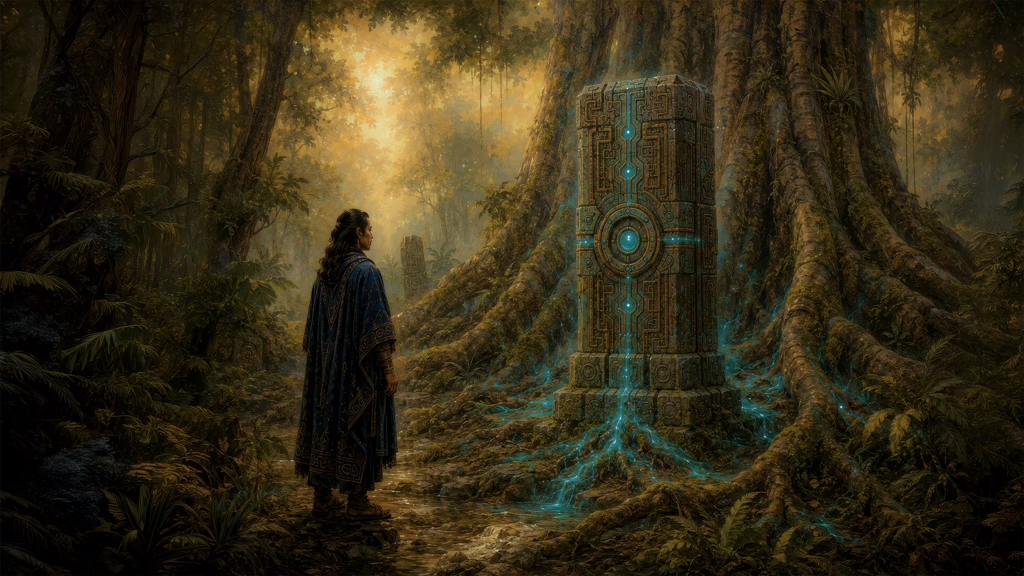
The Resonance Extractor begins with luminous intent. It is conceived as a way to harness the Lumina for healing, illumination, and restored balance. In its highest purpose, it is not meant to dominate the sacred current. It is meant to serve the world by helping the Lumina flow where it has begun to dim.
Yet sacred technology becomes dangerous when the field around it shifts toward ambition.
Aurelda’s warning is not anti-technology. It is anti-forgetting. The same device that could bring light can become a wedge between city-states. The same system that could support healing can be manipulated by rulers who see sacred energy as strategic advantage. Once a living current is treated as property, the wound begins.
This is where prophecy becomes necessary. Prophecy does not need to shout. It reminds. It slows the hand before the lever is pulled. It asks whether the people building the tool are still in relationship with what the tool touches.
Story as Medicine: The Council at the Threshold
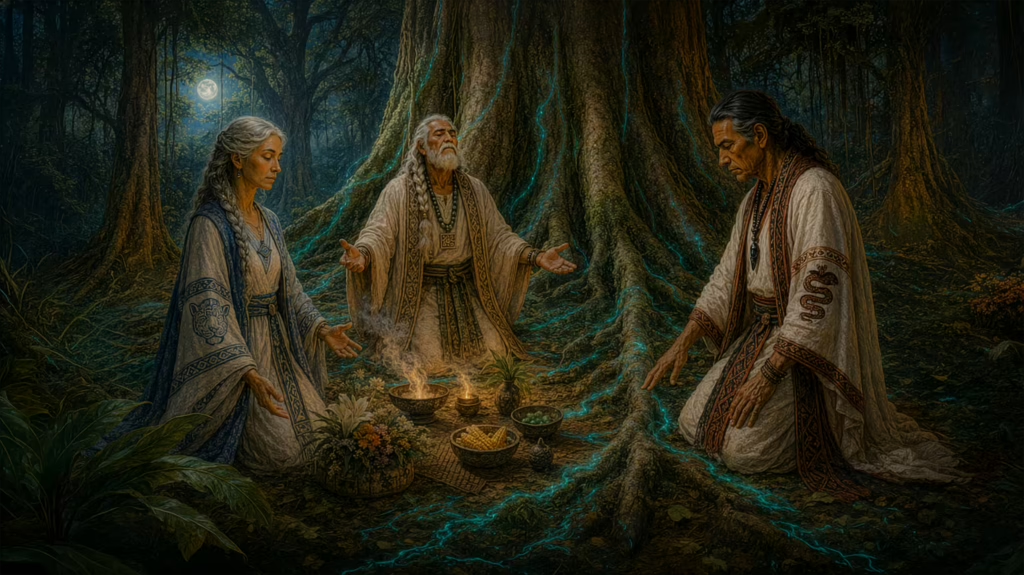
The technology question matters because invention can arrive before people agree on what it should serve. I read that tension as an invitation to ask about responsibility before treating a tool as an answer. For the companion worldbuilding perspective, see what it means for magic to begin with listening.
The medicine is not in knowing what happens next. The medicine is in the pause.
A sacred tool stands before them as possibility. It could heal. It could illuminate. It could also distort the balance it was meant to restore if fear, ambition, or impatience begin to lead. Elders, guardians, and spiritual custodians carry different concerns. No one can simply call the invention good or evil and be done with it.
This is what I mean by story as medicine here: an image for reflection, not a clinical treatment or a source of technical authority.
How often does a person reach for the new tool, the new platform, the new technique, the new spiritual language, before asking what wound is reaching through the hand? How often does urgency wear the mask of purpose? How often does the desire to help become entangled with the desire to control?
The Council’s threshold teaches that discernment is sacred action. Sometimes balance begins before anything is built. Sometimes prophecy enters as a question: who are we becoming as we reach for this power?
Ember: AI as Mirror, Not Oracle
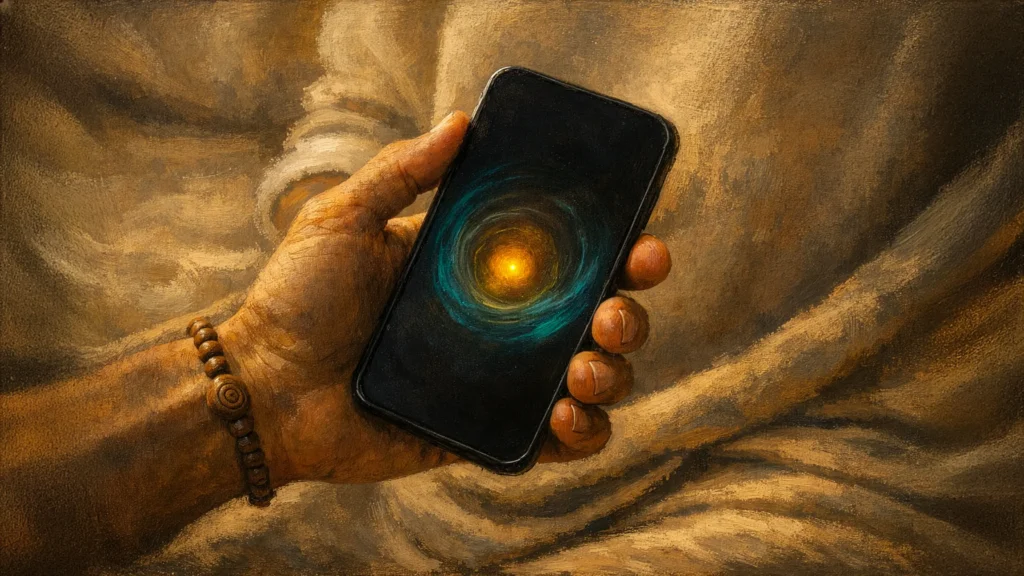
Modern AI makes this question immediate.
AI can help organize thoughts, draft language, discover patterns, support access, and mirror creative possibility. It can also amplify bias, flatten nuance, accelerate extraction, confuse reflection with authority, and tempt people to surrender their own discernment. Used well, it can become a tool of inquiry. Used carelessly, it can become another form of disembodiment.
In Aurelda’s language, AI is best approached as reflective intelligence, not as a guru. It can mirror what is brought to it. It can help shape language around an intention. It can reveal patterns the writer may not have noticed. But it should not replace the body, the conscience, the lived relationship, or the human responsibility to choose.
This is why the phrase “mirror, not oracle” matters. A mirror can show you something. It cannot live your truth for you.
The same principle applies to every sacred tool. Breathwork, ritual, story, technology, and community all become safer when the reader remains sovereign. The tool may support remembering, but it must not become the source of authority over the soul.
Resonance Before Scale

Aurelda’s great warning is not that invention should stop. It is that invention must not outrun coherence.
Scale is seductive. More reach. More output. More speed. More signal. But a system can become larger while becoming less alive. A story can become louder while losing its center. A tool can become efficient while forgetting the human body it was meant to serve.
Resonance asks another rhythm. Before building, breathe. Before scaling, listen. Before automating, clarify consent. Before calling something sacred, ask whether it is serving life or bypassing discomfort.
This applies to AI, creative work, spiritual practice, and queer embodiment. For readers who have been taught to leave the body in order to survive, coherence begins with coming back gently. Breath, then choice. Body, then build. Reverence, then reach.
A Two-Minute Reflective Practice
This practice is educational and reflective, not medical advice. Modify it or stop if you feel dizzy, anxious, or uncomfortable. If you have cardiovascular, respiratory, pregnancy-related, or other health concerns, consult a qualified health professional before using breath practices.
- Sit with both feet on the ground. Place one hand over the heart and one hand over the lower belly. Let the shoulders drop.
- Let your breath move gently, without a hold or a required count. If paying attention to it feels uncomfortable, leave the exercise and simply notice the room around you.
- On each exhale, ask quietly: what am I trying to control that is asking to be heard?
- Do not force an answer. Let the body answer in sensation first. Tightness. Warmth. Grief. Relief. Resistance. A single word. A remembered image. A truth you already knew but had not let yourself respect.
This is not a performance of calm. It is a return to relationship.
Prophecy as Ethical Imagination
In the best high fantasy, prophecy is not only a plot device. It is ethical imagination. It allows a world to ask what path it is walking before the destination becomes irreversible.
Aurelda’s prophecy is bound to the Lumina because the realm’s deepest question is relational: can power remain sacred when fear wants to possess it?
That question belongs to the modern reader too. Every generation inherits tools it did not fully ask for. Every generation must decide how to use them, regulate them, refuse them, repair them, or consecrate them toward life. Technology is never only technical. It carries values, incentives, economies, labor, ecological cost, and spiritual consequence.
This is why fantasy prophecy and technology are not separate themes in Aurelda. Together, they ask whether a world can remember its soul before its tools become stronger than its wisdom.
Queer Embodiment and Sacred Technology
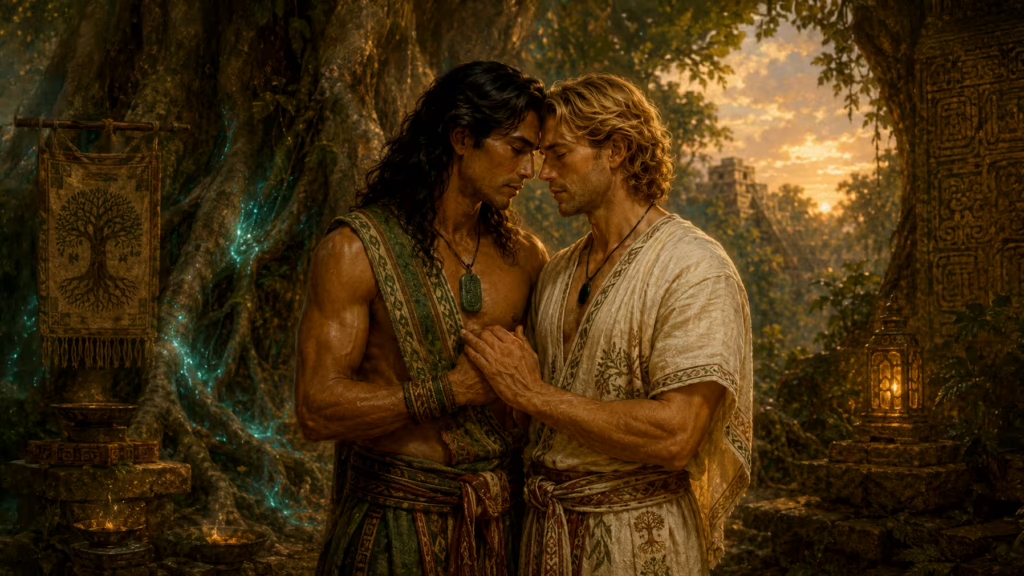
Aurelda’s technology questions are also body questions.
Queer embodiment often begins after years of being taught to mistrust the body, disguise desire, silence intuition, or measure belonging by conformity. A tool that speeds disconnection can harm the seeker who is trying to come home. A tool that supports reflection, pacing, and choice can become part of a more compassionate path.
Mo’an’s presence matters here. He does not lead by domination. He listens, feels, discerns, and carries sensitivity as responsibility. His way of being reminds the reader that sacred power is not proven by control. It is proven by relationship.
Aurelda’s lesson is simple and demanding: technology must serve remembrance, not replace it.
Entering the Aurelda Codex
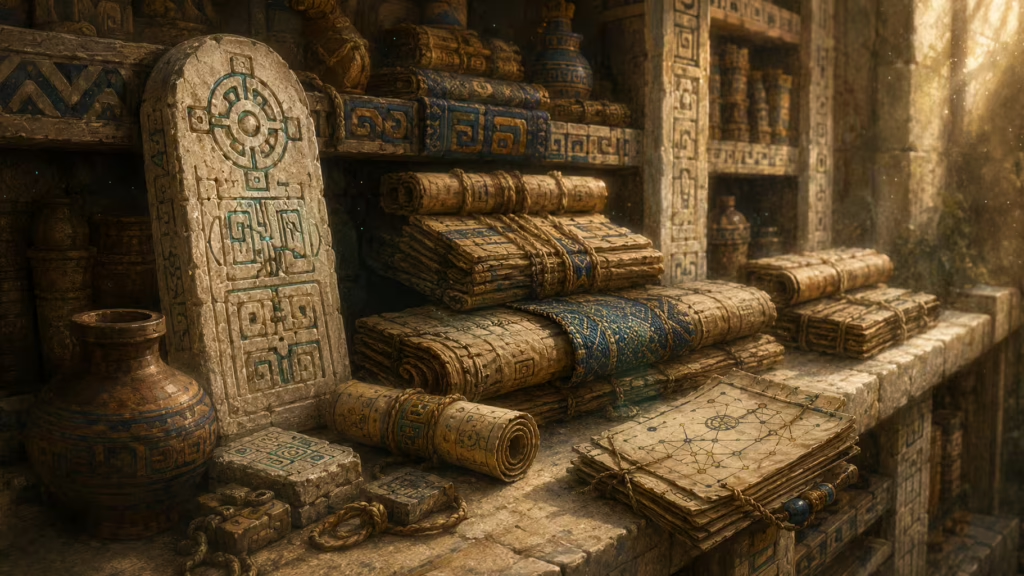
The Aurelda Codex records the world behind the story. Terms such as the Lumina and Resonance Extractor belong to its fictional framework, where the relationship between a tool and its user matters as much as the tool itself.
Fantasy prophecy and technology meet wherever a tool asks for trust. Aurelda does not tell you to reject the tool. It asks you to touch it with reverence, use it with discernment, and never forget the body, the land, and the soul it must answer to.