
Sacred Masculinity for Gay Men: Reclaiming Tenderness, Power, and the Body’s Remembering
Sacred masculinity for gay men ingegrates breath, story, and body-based remembrance so you can reclaim tenderness without shame.
This post may contain affiliate links; your purchases help earn me a small commission at no extra cost, supporting the art and continued growth of Aurelda.
For many gay and queer men, masculinity was not offered as a home. It was handed down as a test. Be hard enough. Want quietly enough. Laugh off tenderness before anyone can name it. Stay in control, even when your body is asking for breath, touch, grief, prayer, or truth.
Yet something in you may already know that this version of power is too small. The ache you carry is not always a wound asking to be hidden. Sometimes it is memory pressing against the walls of an old story. Sometimes it is the body remembering that strength was never meant to be severed from tenderness.
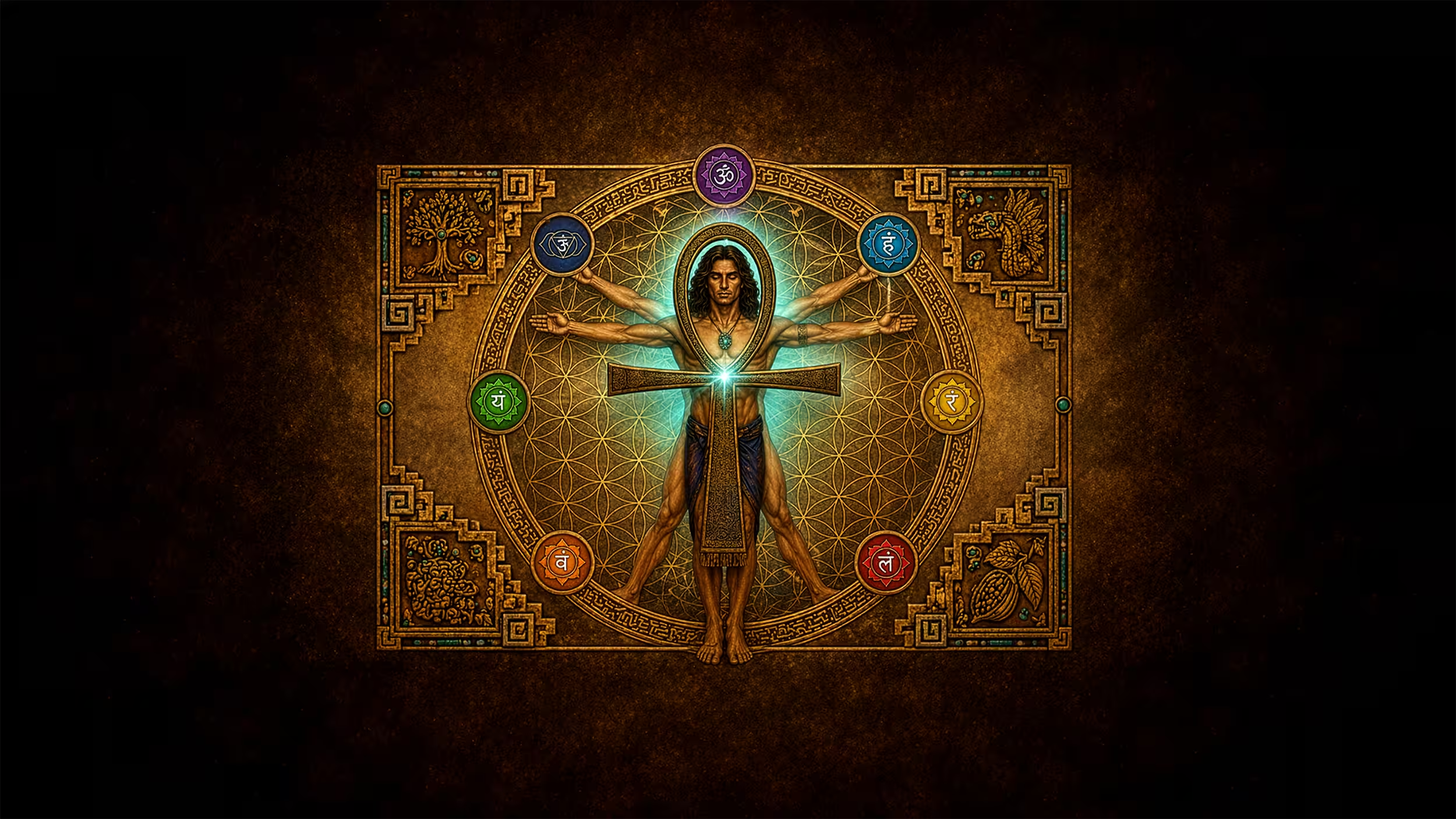
This is where The Book of Remembering opens its threshold. It does not ask you to become someone else. It invites you to return to the part of you that was never meant to live divided: breath from body, desire from dignity, masculinity from love.
What Sacred Masculinity Means in Aurelda
In Aurelda, the Divine Masculine is not domination, hierarchy, conquest, or performance. It is creative polarity. It is the living current that initiates with integrity, desires without possession, protects without control, and creates without abandoning the heart.
That matters because many men have been trained to confuse armor with safety. If you learned to survive by becoming unreadable, you may have mistaken numbness for maturity. If you learned to hide your longing, you may have mistaken secrecy for strength. Sacred masculinity begins when the old armor loosens enough for presence to return.
For gay and queer men, this return can feel especially charged. Same-sex tenderness has often been treated as a threat to masculinity, not because tenderness is weak, but because tenderness exposes the lie that masculinity must be invulnerable. The body knows what culture tried to deny: intimacy between men can be human, sacred, ordinary, erotic, devotional, playful, healing, or all of these at once.
Sacred masculinity is not a new costume. It is the end of pretending.
Why Gay Spirituality Needs the Body
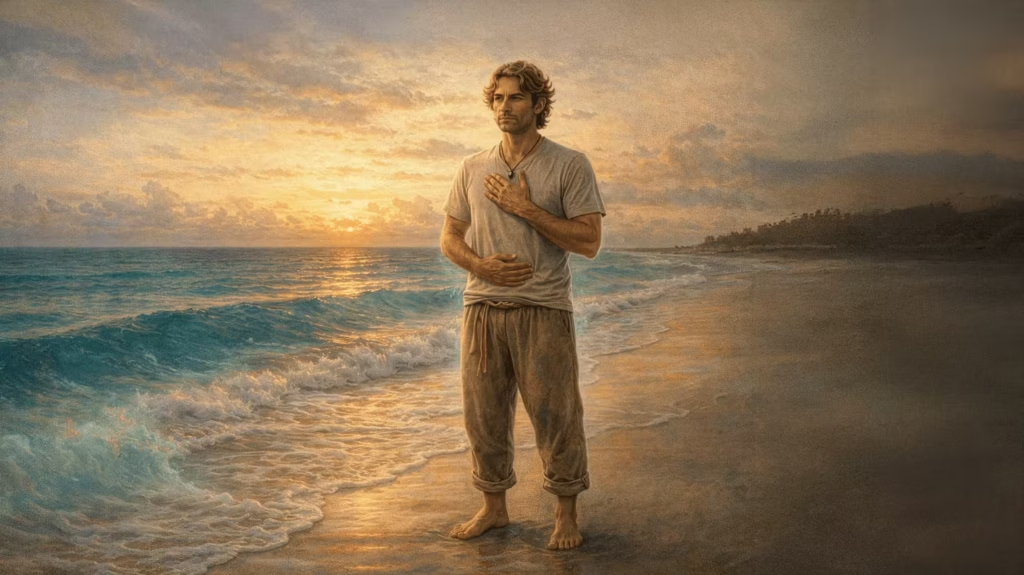
Gay spirituality is not only about belief. It is about belonging. For many queer people, the spiritual path begins where inherited religion, family systems, or cultural shame made the self feel exiled. Healing does not always mean rejecting every tradition you came from, but it does mean refusing any path that requires you to abandon your own soul.
Research on lesbian, gay, and bisexual mental health has long shown that stigma, concealment, rejection, and internalized shame can become chronic stressors. Other studies on gay and lesbian spirituality suggest that existential well-being, meaning the felt sense that life has purpose and coherence, can support self-esteem, acceptance, and reduced alienation. In simpler language, the soul needs a place to breathe.
The body needs that place too. Rigid masculine scripts often teach men to silence emotion, dismiss need, distrust softness, and perform self-sufficiency. Over time, that training can shape how a man breathes, how he reaches for help, how he experiences desire, and how quickly he retreats when tenderness becomes real.
That is why The Book of Remembering does not treat the body as an obstacle to spiritual truth. It treats the body as one of truth’s oldest pathways.
The Ancient Mirror, Held with Care

Aurelda is inspired by Mesoamerican aesthetics, sacred relationship with land, ancestral memory, and the wisdom of balance. It is not a historical reconstruction, and it should not be read as a claim that all Indigenous societies held one single view of gender or sexuality.
The more careful truth is also the more powerful one. Scholarship on sexuality in the Indigenous Americas points to a wide range of understandings before and beyond European colonial categories. Some traditions held non-binary, fluid, and third-gender realities in ways that do not fit neatly inside modern Western labels. Contemporary Zapotec muxe communities in Oaxaca also remind us that gender diversity can be woven into social, familial, ritual, and cultural life without being reduced to a modern identity category.
This does not mean the past was simple or universally affirming. It means the colonial gender binary was not the only possible map of the human soul. Aurelda listens at that threshold with reverence, not appropriation. It creates a mythic world where fluidity, sacred longing, and embodied truth can be imagined without shame.
Story as Medicine for the Masculine Wound
There is a reason story reaches places advice cannot. Narrative medicine and bibliotherapy both recognize that stories can help people find language, meaning, reflection, and new ways to relate to suffering. A good story does not simply tell you what to think. It gives your nervous system another pattern to feel.
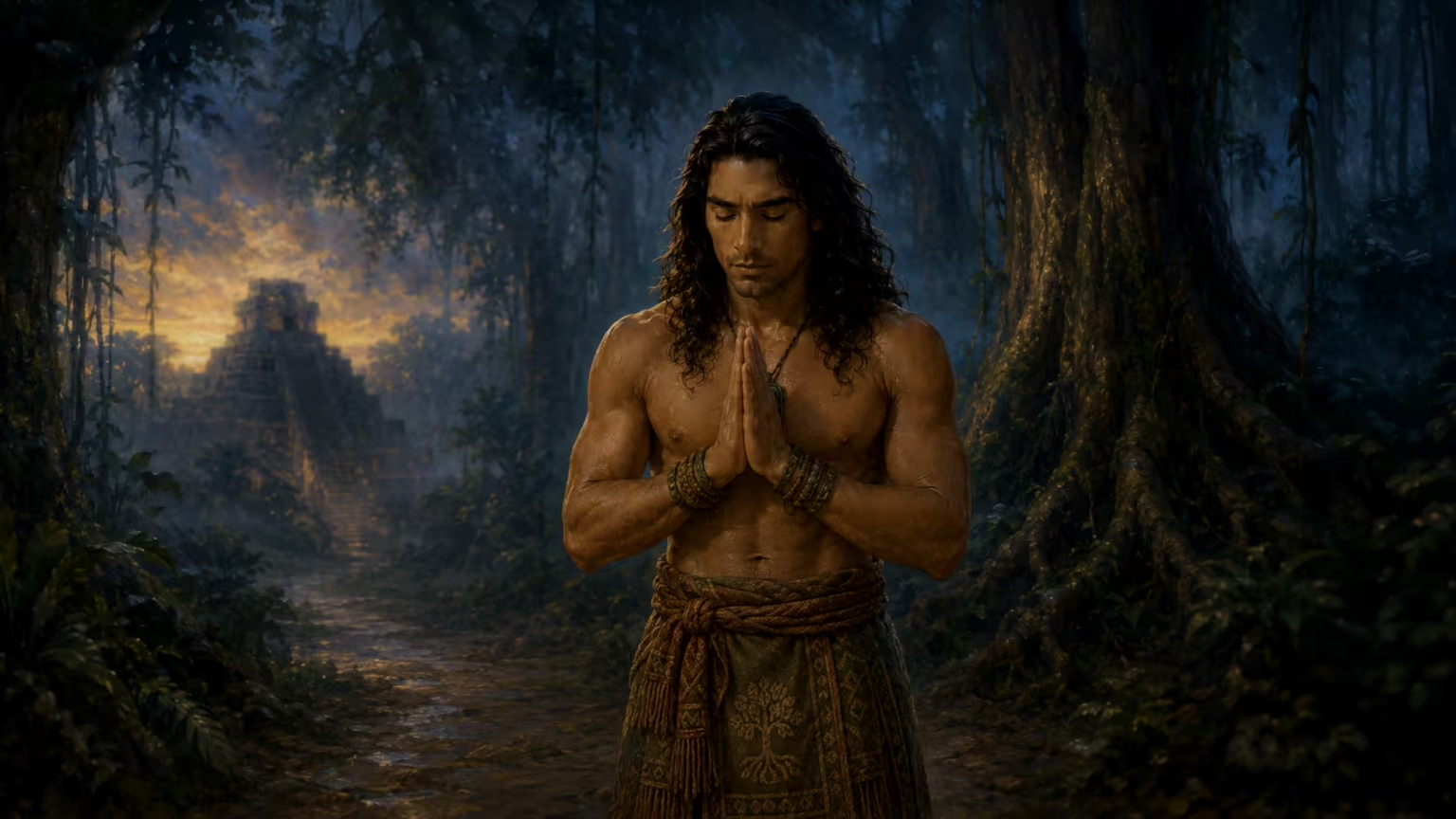
In the Aurelda Chronicles, Mo’an offers one of these patterns. As a Resonance Keeper and spiritual warrior, he does not become powerful by becoming untouchable. His path asks him to hold fear, love, grief, and doubt without turning away from the Lumina within them. His vulnerability is not a flaw in his calling. It is part of how his calling becomes real.
That is the story as medicine. A man raised to believe that power means control can meet Mo’an and remember another possibility. Strength can be tender. Devotion can be masculine. Desire can become sacred when it is held with honesty, consent, and care. The heart does not weaken the masculine. It gives the masculine somewhere true to stand.
This is not a plot summary. It is an invitation to notice what kind of man your body relaxes around. The one who conquers, hides, and performs, or the one who can stay present when truth begins to speak?
Reclaiming Divine Masculine Power Without Performance

To reclaim divine masculine power is not to inflate yourself. It is not to become louder, harder, more desirable, more spiritual, or more certain. It is to stop outsourcing your worth to systems that only recognized you when you were edited down.
For gay men, this may mean letting desire become honest instead of secretive. It may mean allowing tenderness to exist without mocking it. It may mean learning that consent is not only a rule between bodies, but a way of living inside your own body. It may mean breathing before you perform, pausing before you disappear, and asking what part of you is trying to be loved through the mask.
The Book of Remembering names this wound directly. It speaks to the man who confused hardness with safety, distance with freedom, or silence with strength. It blends sacred transmission, mythic story as medicine, breathwork, somatic insight, ancient wisdom, and modern science to offer a path toward coherence.
Coherence is not perfection. It is the moment your breath, body, longing, and truth begin to face the same direction.
A Simple Practice Before You Read
Before opening the book, place one hand on your chest and one hand low on your belly. Let your inhale arrive without forcing it. Let your exhale be longer than your explanation.
Ask quietly: What part of my masculinity did I learn to hide in order to be safe?
Do not rush for an answer. Let the body respond first. You may feel warmth, grief, resistance, desire, nothing at all, or a quiet sense that something old has heard you. That is enough for one breath.
Then read from that place. Not to consume a teaching, but to let the teaching meet you where your life is actually happening.
Begin the Return to Resonance
I am no longer interested in a spirituality that asks men to transcend the very places where they learned to leave themselves. I am interested in a path that can hold breath and grief, desire and dignity, masculine strength and open-hearted tenderness. I am interested in a remembering that includes the body, not as temptation or obstacle, but as witness.
If you have felt the ache, you are not alone. If you have mistaken hardness for safety, you are not beyond return. If you have confused distance with freedom, you can learn another rhythm. The part of you that longs for something real is not the problem. It may be the thread.
The Book of Remembering is not here to make you less human. It is here to help you come back to the humanity that shame, performance, and trauma taught you to exile. Back to the breath. Back to the body. Back to the story beneath the story. Back to the remembering.
Find Your Thread
The Seven Threads Protocol helps you name your pattern, reconnect breath, body, and story, and begin a grounded path back to your own remembering with clarity. This free guide is offered for reflection, education, and spiritual remembrance.
Works Cited
- “The Importance of Spirituality Among Gay and Lesbian Individuals.” P. Philip Tan. 2005.
- “Prejudice, Social Stress, and Mental Health in Lesbian, Gay, and Bisexual Populations: Conceptual Issues and Research Evidence.” Ilan H. Meyer. September 2003.
- “Guidelines for Psychological Practice with Boys and Men.” American Psychological Association, Boys and Men Guidelines Group. August 2018.
- “Narrative Medicine: A Model for Empathy, Reflection, Profession, and Trust.” Rita Charon. October 17, 2001.
- “Bibliotherapy as a Non-Pharmaceutical Intervention to Enhance Mental Health in Response to the COVID-19 Pandemic: A Mixed-Methods Systematic Review and Bioethical Meta-Analysis.” Daniela Monroy-Fraustro, Ivonne Maldonado-Castellanos, Mariana Aboites-Molina, Sofia Rodríguez, Paola Sueiras, Nadia F. Altamirano-Bustamante, Alexia de Hoyos-Bermea, and Myriam M. Altamirano-Bustamante. March 15, 2021.
- “Sexuality in the Traditional Systems of Thought and Belief of the Americas.” Rosemary A. Joyce. April 26, 2024.
- “Hybrid Gender Colonization: The Case of Muxes.” Jacobo Ramirez. June 24, 2022.
Where Will You Go From Here?
Comment Below
Share the Love
Share this article with kindred spirits.
Jason Samadhi

Begin the Hero’s Journey
Enter the world of Aurelda through The Prophecy of Resonance, Book One of The Aurelda Chronicles. Begin the journey with free sample chapters of Book 1.
Listen & Re-member
Aurelda Soul blends mythic storytelling, sacred wisdom, and grounded reflection for modern seekers finding their way home.
Find Your Thread
The Seven Threads Protocol helps you name your pattern, reconnect breath, body, and story, and begin a grounded path back to your own remembering with clarity. Download the free Seven Threads of Light Protocol guide now.
